

Download this week’s full edition!
While energy markets have reacted to Operation Epic Fury with an immediate spike in oil and gas prices, historical precedent—such as the 2022 Russia-Ukraine conflict—suggests that sustained price increases are far from guaranteed, given the unpredictable nature of commodity markets and the complex interplay of supply and demand.
What caught our eyes this week
Military operations and oil prices: A quick historical analog
As is typical with geopolitical issues in the Middle East, the primary conduit for global economic impact is through energy markets. The market’s immediate reaction to Operation Epic Fury was as expected, with oil and gas prices spiking higher. Looking ahead, the future trajectory will depend on the duration of the disruption and the severity of any damage to energy facilities in the region. Even in the event of a more prolonged conflict, history tells us that market behavior can often be surprising. For example, after rising for weeks amid reports that Russian troops were building along the Ukraine border in early 2022, oil prices spiked sharply when news broke of the invasion on February 24. However, that spike ultimately marked a high point for crude oil that still holds to this day, even as that war rages on. In other words, even if you knew upfront that the war in Ukraine would stretch for several years, you would have lost money trying to buy oil for all but the briefest of windows in the very beginning. We don’t want to understate the gravity of the current situation, but we take dramatic calls for massive and sustained increases in oil prices with a grain of salt. The commodity market is a fickle beast, and predictions involve deciphering a complex web of supply and demand.
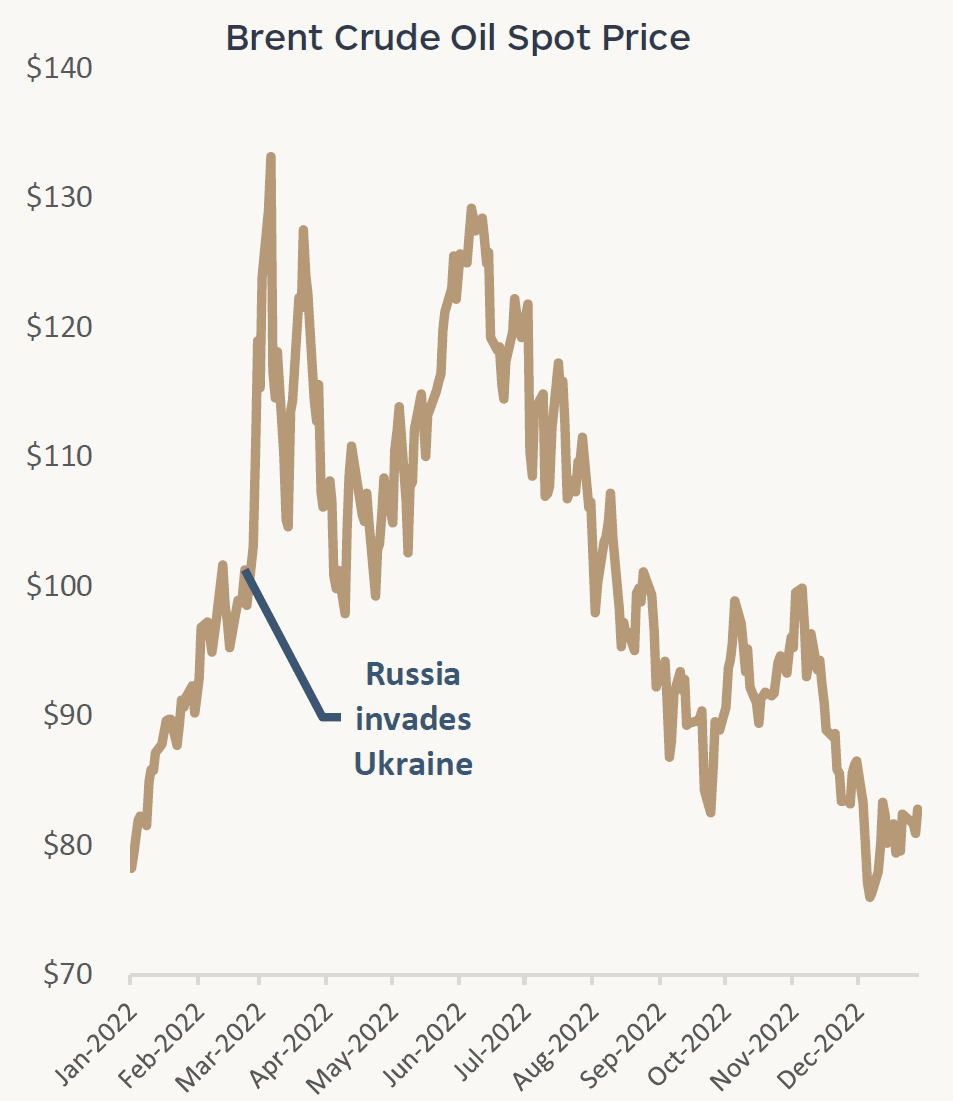
CHART OF THE WEEK: Cerity Partners, YCharts.
Past performance does not guarantee future results.
Please read important disclosures here.