

Download this week’s full edition!
Despite stagnant real disposable incomes driven by slowing wage growth and persistent inflation, consumer spending has held up—in part due to declining savings rate and a wealth effect from appreciated assets, a dynamic that may intensify as retiring boomers increasingly depend on asset sales over wages.
What caught our eyes this week
Consumers Are Still Hanging in There
Real disposable personal incomes (i.e. after-tax, after-inflation incomes) have been flatlining recently, and in fact are down a bit over the past year. This is a relative rarity for non-recessionary periods. It seems the combination of slowing wage growth and sticky inflation has been keeping a lid on purchasing power. Even still, consumption data continues to be decent, increasing 2.2% year-over-year on an after-inflation basis. Part of the explanation is a dwindling savings rate, with consumers using a bigger portion of their take-home pay to maintain their spending patterns. Another could be the wealth effect, as the disposable income calculation doesn’t incorporate gains from the sale of stocks or houses, both of which have largely enjoyed hefty appreciation in recent years. The impact of the wealth effect on consumption could grow over time as baby boomers begin to retire en masse, rendering their spending patterns less susceptible to trends in labor markets and more susceptible to trends in asset prices.
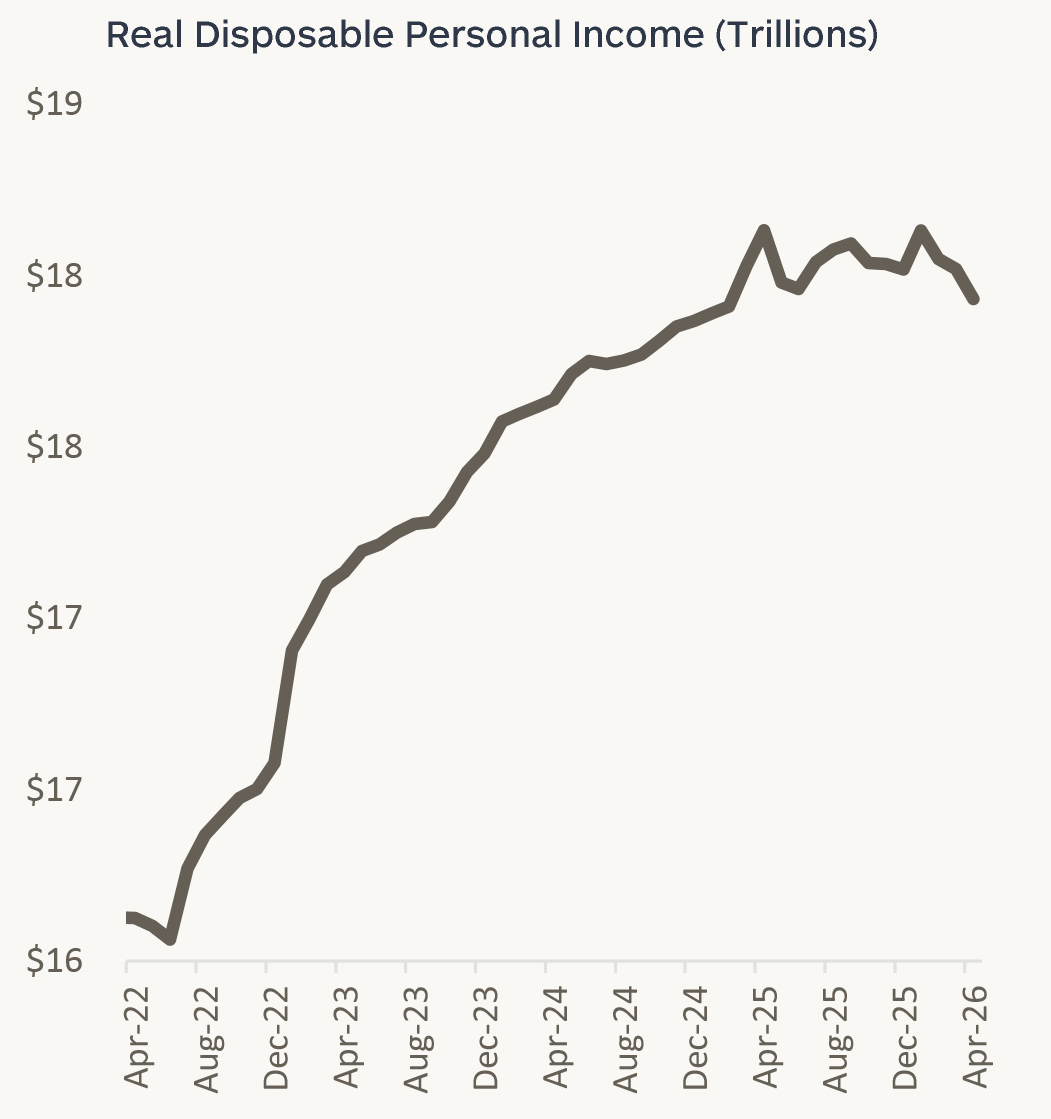
CHART OF THE WEEK: Real Disposable Personal Income, Billions of Chained 2017 Dollars, Monthly, Seasonally Adjusted Annual Rate, Cerity Partners, FRED, 6/1/2026
Past performance does not guarantee future results.
Please read important disclosures here.