

Selling a business is not a single decision. It is a sequence of decisions that begin long before a buyer is ever approached. Owners who ask the right questions early are far more likely to protect value, reduce risk, and achieve outcomes aligned with their personal and financial goals.
This post outlines the critical questions every owner should answer before deciding to sell their business. Failing to do so often results in discounted valuation and unfavorable deal terms followed by post-transaction regret.
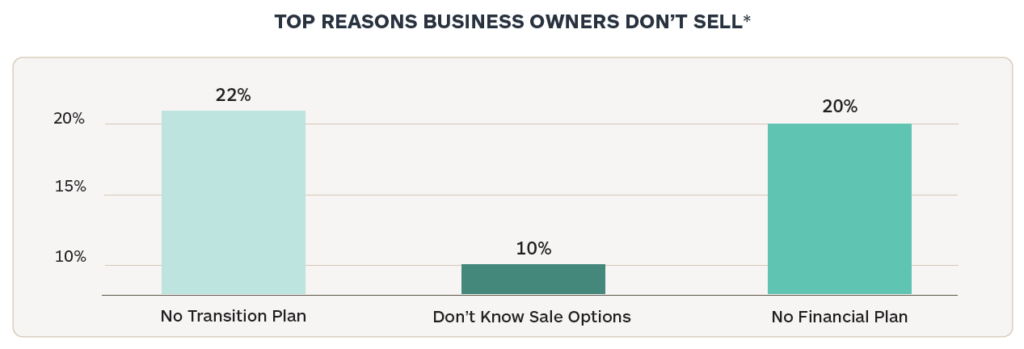
Source: 2024 EPI Business Owner Survey
What is my business really worth based on market reality and discounted cash flow?
Most owners have a general sense of what they believe their business is worth. Unfortunately, belief and market reality are often very different. Buyers value businesses based on sustainable earnings, risk profile, future growth, and a valuation method formally known as discounted cash flow. Another area that can cause valuation challenges is cash-based accounting. It can distort performance while creating uncertainty around normalized earnings. Without a clear understanding of value, owners risk misaligned expectations, delayed decisions, or walking into negotiations at a disadvantage.
Are there deal-breakers that could surface during diligence?
Deal-breakers rarely appear out of nowhere. They are often well known by sellers, just not addressed. When these issues surface late in diligence, buyers gain leverage and often demand price reductions, higher earnouts, and unfavorable terms. Ask yourself if there are risks, issues, or past incidents that make your business less attractive to potential buyers. Unfortunately, unaddressed risks do not disappear. They are either priced into the deal or used as leverage against you during negotiations. Some deal-breakers may include customer concentration; key-person dependency; legal or regulatory exposure; environmental, safety, or operational incidents; weak internal controls; or undocumented processes.
Am I willing to accept deep discounts due to lack of preparedness?
Unpreparedness carries a cost that is paid at closing. Selling before you are ready often means leaving value on the negotiating table; unfortunately, this lost value cannot be recovered after the transaction closes. In many cases, modest preparation time could have materially improved outcomes.
Do I have the right transaction specialists to guide the process?
Transactions are not routine business events. They require specialized experience, coordination, and discipline. Many owners rely on advisors who are trusted but are not transaction specialists. Without an integrated, experienced team, gaps emerge, timelines slip, and opportunities are missed. The right team does more than close transactions. It can help preserve value and reduce risk.
Preparedness creates optionality
The most successful business owners do not ask these questions at the negotiating table—they ask them years in advance.
Preparedness:
- Strengthens negotiating leverage;
- Reduces uncertainty and stress;
- Improves valuation and deal terms; and
- Aligns the transaction with long-term goals.
Selling your business is a defining moment. Asking the right questions early can help increase the likelihood of a successful outcome. A successful transaction aligns financial outcomes with life after the transaction.
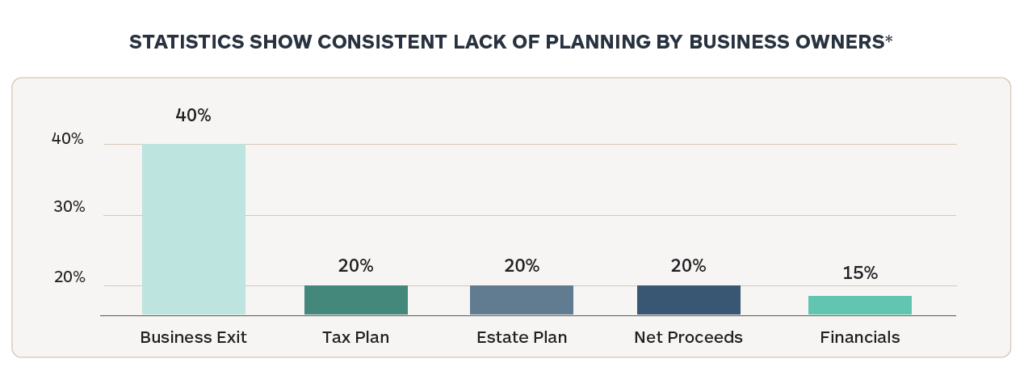
Source: 2024 EPI Business Owner Survey
About our approach
We guide business owners through a structured, integrated transaction-readiness process designed to protect value, reduce risk, and align the transaction with life after the deal. Our approach is proactive, integrated, and owner-centric, focused on preparing the business, the transaction, and the owner well before going to market. By aligning financial, operational, tax, and personal planning early, we help owners reduce risk, enhance value, and navigate the entire transaction from pre-planning through post-close.
Get started: Schedule your feasibility assessment
Our feasibility assessment can be a valuable early step for many owners considering a sale, providing owners with an objective, market-based view of where they stand before going to market. It evaluates current value, financial readiness, operational risks, management depth, and personal and tax considerations—identifying potential deal-breakers, valuation discounts, and opportunities to increase value well in advance of a sale. By clarifying what is achievable, what needs to be addressed, and where leverage can be created, the feasibility assessment replaces assumptions with facts and allows owners to make informed decisions, protect value, and enter the transaction process with confidence and control.
Reach out to our office at 646-928-8775 or visit our practice page to learn more.
Please read important disclosures here.