

While US equity markets are up solidly year to date and trading near all-time highs as of the end of October, there have been some rumblings in the vaunted artificial intelligence (AI) trade as investors are becoming more concerned with the massive capital expenditures (capex) needed to meet expected demand. Because returns on these capital investments will occur over several years and have yet to be reflected in tangible productivity and revenue growth across the entire macroeconomy, we’ve seen some notable profit-taking by equity holders. The PHLX Semiconductor Sector Index (SOX) is down roughly 30% from its summertime highs, and Meta Platforms fell close to 20% in late October after announcing plans for an equity raise to finance even more capital spending over the coming year.
Before the AI revolution, which began in earnest in 2023, most of the so-called hyperscalers like Meta were asset-lite companies that generated tremendous free cash flow and seldom had to access credit markets to finance growth initiatives. Transitioning to AI as the primary engine of growth necessitated large investments in expensive graphic processing units housed in large data centers. These now asset-heavy companies can no longer finance the necessary expenditures internally and must access both the debt and equity markets for financing. Investors initially saw the vast total addressable market for large language models and were eager to provide the capital. They were rewarded royally over the past three years with tremendous returns on most of their investments.
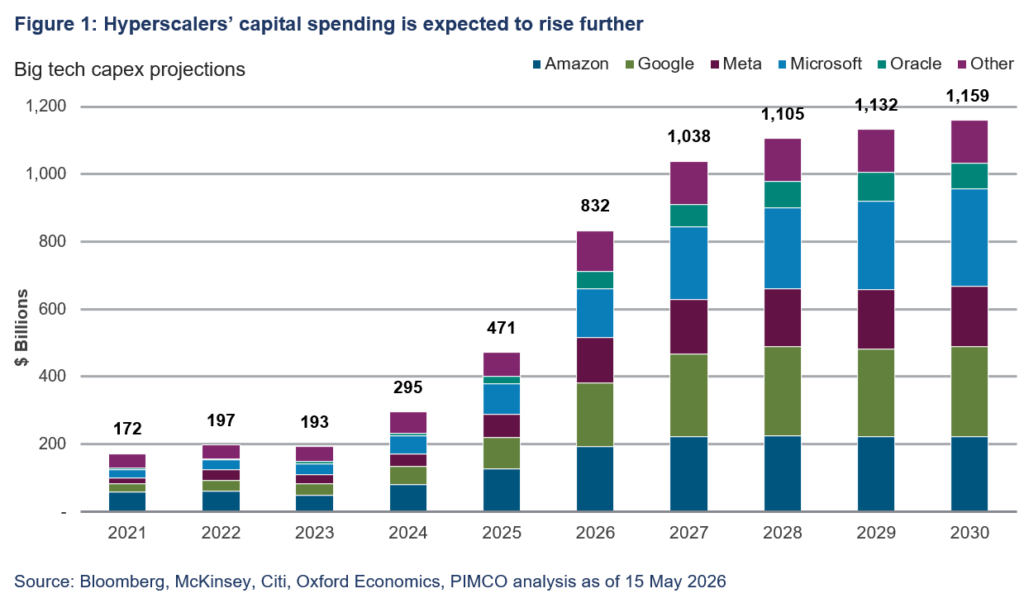
But like any technological innovation in the modern economic history of mankind, it is never a straight-up run. We often discuss the “wall of worry” equity markets must climb to produce strong inflation-adjusted returns. On a more micro level, investors in AI are beginning to climb their own wall. Now that the theme has been firmly established, investors are beginning to question its staying power. Using a baseball analogy, they are asking what inning of the game we are playing. They also worry about Chinese competition in open-source models, which can begin to squeeze margins.
One of the bigger surprises in what we believe are still the initial stages of this technological revolution is the growing opposition to data center construction. What was once viewed as an economically attractive project for a regional economy has suddenly become a toxic structure with impacts that may include a local electricity price surge, excessive water usage, and general harm to the environment. With data centers having become an important issue in the mid-term congressional elections, investors are beginning to fear that a mandated slowdown in data center construction will have a reverberating effect, slowing AI capex and the overall US economy, which has become increasingly reliant on business spending at a time when higher interest rates could potentially pressure consumer spending.
We in no way are dismissive of these concerns, but the fundamental reason to remain bullish on the AI theme is that the demand for compute capacity far exceeds the current supply, as manufacturing and service industries across the economy are implementing applications that are expected to boost productivity in a demographically challenged environment of slower labor force growth. With agentic AI applications (those that do not need human prompting) the next stage in the advance, businesses outside the technology industry should soon start to see the promised productivity gains. The need to reshore or near shore manufacturing is an added reason why businesses may consider productivity enhancements.
Gaining financing will naturally become more difficult at this stage of the AI advance as investors become more discerning and better understand that not all projects will be successful. So capital is likely to be rationed or priced according to a more educated assessment of risk as this innovative technology moves through adolescence. Data centers have a public relations problem like that experienced by the shale drillers in the energy space earlier this century. That hurdle was eventually surmounted, and the United States ultimately achieved the vast economic benefit of becoming energy independent.
Associating any capital raise with AI has generally supported financing activity over the past few years. It may no longer be as easy, as some investable projects may not have enough projected revenue to cover the financing cost. Large hyperscalers like Meta, Microsoft, and Alphabet generally have strong balance sheets and access to capital. They will need to continue investing in what is currently an intensely competitive environment. Second- and third-tier data center builders will likely need to pay higher spreads for their financing, which should lead to consolidation in the space as the weaker operators fail.
At the end of October, Anthropic, a leading AI developer, released detailed financial data in conjunction with its planned initial public offering. The phenomenal growth and surprising diversity in revenue sources along with strong third-quarter earnings results from the hyperscalers served as blunt reminders of the continued momentum around the AI investment theme. The ability of Meta to raise $95 billion in equity, SpaceX to raise $40 billion in debt, and Broadcom to negotiate a $63 billion financing arrangement with global investment banks for chip purchases is a strong indication that ample appetite still exists among the investment community to finance continued growth. Private credit is also stepping in to provide needed financing as evidenced by PIMCO’s recent structuring of Rule 144A debt packages to finance massive AI data center campuses. These financing arrangements allowed large technology and infrastructure developers to raise tens of billions of dollars from institutional buyers without a public registration with the Securities and Exchange Commission.
Please read important disclosures here.