

Download this week’s full edition!
Despite conflicting reports on the Strait of Hormuz’s status, its effective closure is disrupting global energy flows, driving up demand for US oil exports and pushing domestic energy prices higher.
What caught our eyes this week
Schrödinger’s strait
We’ve been getting a lot of conflicting information out of the Middle East with respect to the Strait of Hormuz. Is it open? Is it closed? Right now, it feels like both. Even during the brief period where the strait was declared officially open by Iranian authorities, traffic through it was a trickle at best. With recent breakdowns in the ceasefire, it’s starting to feel more closed than open again. The reality is that shipments through the strait will resume when shippers feel it is safe to do so. Until then, the strait is closed—regardless of news flow or government declarations. Meanwhile, we’re starting to hear about empty tankers being rerouted to the United States in search of barrels of oil that are not available through their usual sources. This highlights the global nature of energy markets and explains why we still feel the impacts of the conflict, even if we don’t rely on the Middle East for our own energy imports. We’re a net exporter, and higher demand for our exports pushes prices up. This benefits the energy sector and has positive implications for our gross domestic product calculation. But the price changes will flow through to domestic markets as well.
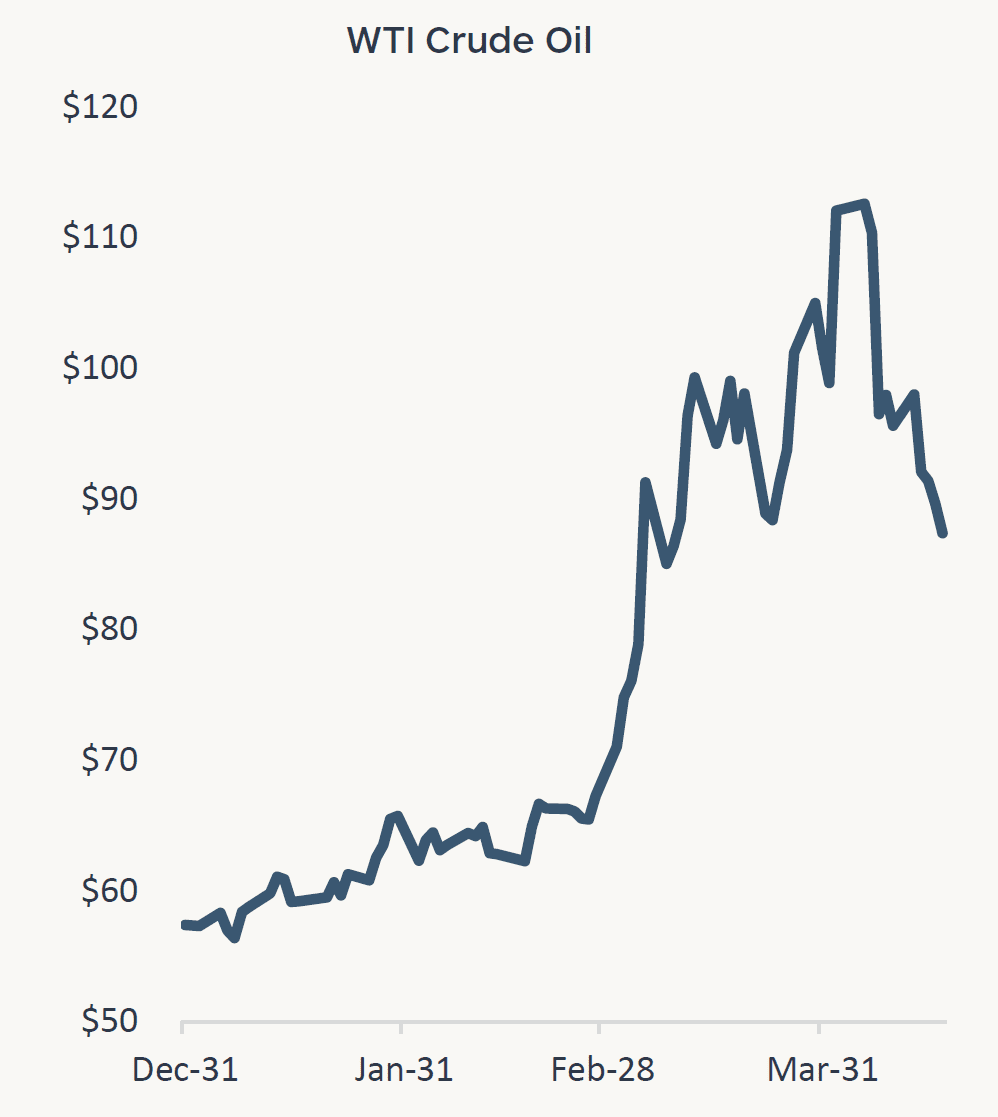
CHART OF THE WEEK: Cerity Partners, FactSet, through April 17, 2026.
Past performance does not guarantee future results.
Please read important disclosures here.