

Download This Week’s Full Edition!
Core goods inflation ticked up modestly due to tariff pressures, but broader disinflation trends and weakness in the labor market remain the Fed’s primary focus.
What Caught Our Eyes This Week
Tariffs Are Having a Clear, but So Far Mild, Impact on Prices
Core goods inflation (which excludes food and energy) is starting to move higher, up 1.5% year over year as of August. That rate isn’t alarming, but it is above average for the 21st century. There is evidence that companies have so far chosen to absorb much of the initial wave of tariff costs, passing only a small portion onto customers. Going forward, the extent to which they start to get aggressive in protecting margins will matter for goods inflation. Luckily, imported goods aren’t a big portion of the CPI basket, estimated at just 11%.
Elsewhere in the report, shelter continues along a painfully slow but steady path of disinflation, while inflation for other services cooled off a bit, which is likely what the FOMC will focus on when members meet this week. Tariff inflation is real, but as of now it is not leaking out into other less-impacted industries. This gives the FOMC a green light to focus on labor markets, where initial jobless claims just jumped to their highest level in almost five years (although a funky seasonal adjustment might be to blame). Finding a sustainable path back to 2% is still a problem, but as Fed Chair Jerome Powell made clear in Jackson Hole, it’s a problem for another day.
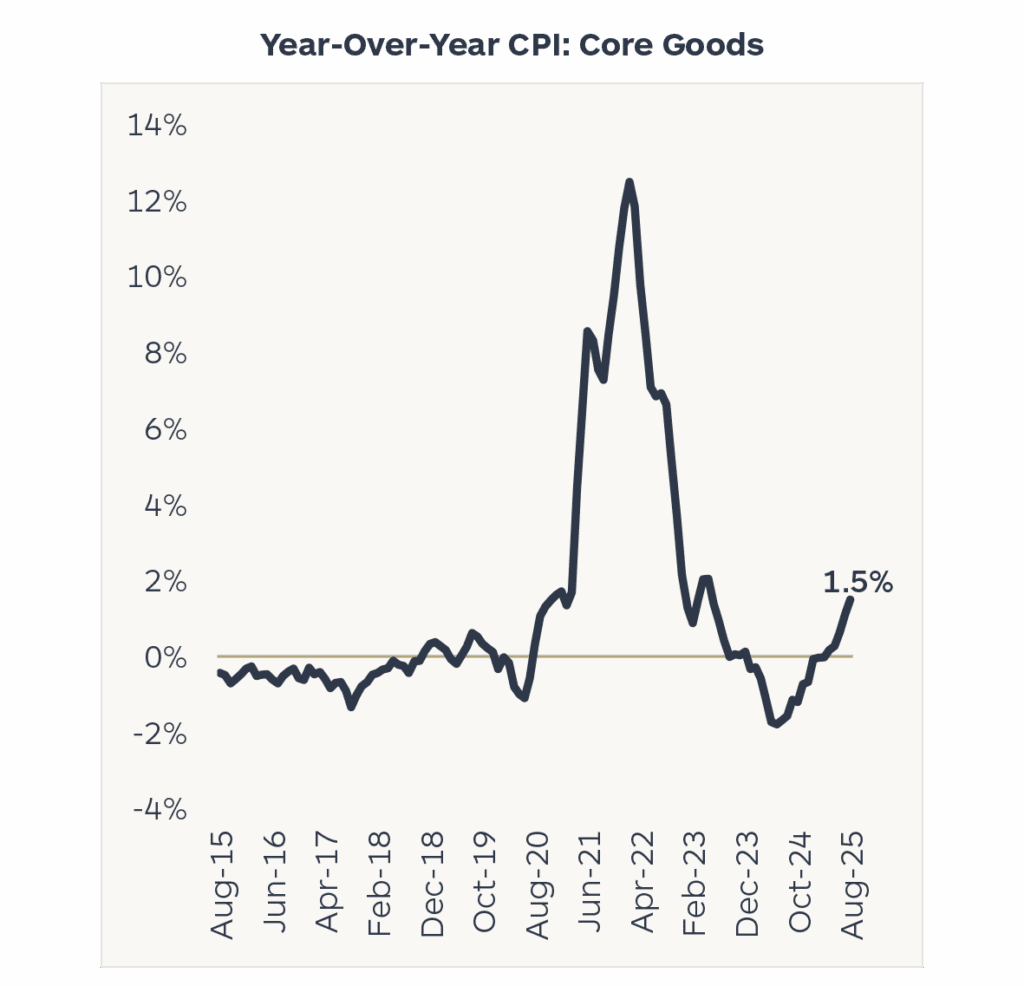
CHART OF THE WEEK: Consumer Price Index for All Urban Consumers: Commodities Less Food and Energy Commodities in U.S. City Average, Seasonally Adjusted, Cerity Partners, FRED, 09/12/2025
Past performance does not guarantee future results.
Please read important disclosures here.