
Download this week’s full edition!
Year-over-year consumer price inflation rose to 4.2% in May, primarily due to surging gasoline prices, though a reported US–Iran peace deal may ease energy pressures going forward—even as broader inflation challenges remain for new Fed Chair Kevin Warsh heading into his first FOMC meeting.
What caught our eyes this week
Not out of the woods yet
As expected, year-over-year consumer price inflation rose to 4.2% in May, driven by surging gasoline prices. Oil is dropping this morning on news of a reported peace deal between the United States and Iran that will facilitate a full reopening of the Strait of Hormuz. If true, it probably means the worst is behind us for energy inflation, but don’t expect prewar levels anytime soon. Even as oil starts flowing again, we’ll likely see an aggressive period of global inventory restocking to backfill rapid emergency drawdowns. The price impact has also been dampened by a few million barrels per day of demand destruction that should return when the outlook improves. And there’s more to the US inflation story than just oil: Take so-called “supercore inflation,” which looks at services inflation excluding shelter. This has seen a limited impact from the war in the Middle East but is still running at 3.7%. Resolving the energy front will be helpful, but there are other things that will be tough to ignore when new Fed Chair Kevin Warsh convenes his first Federal Open Market Committee meeting this week.
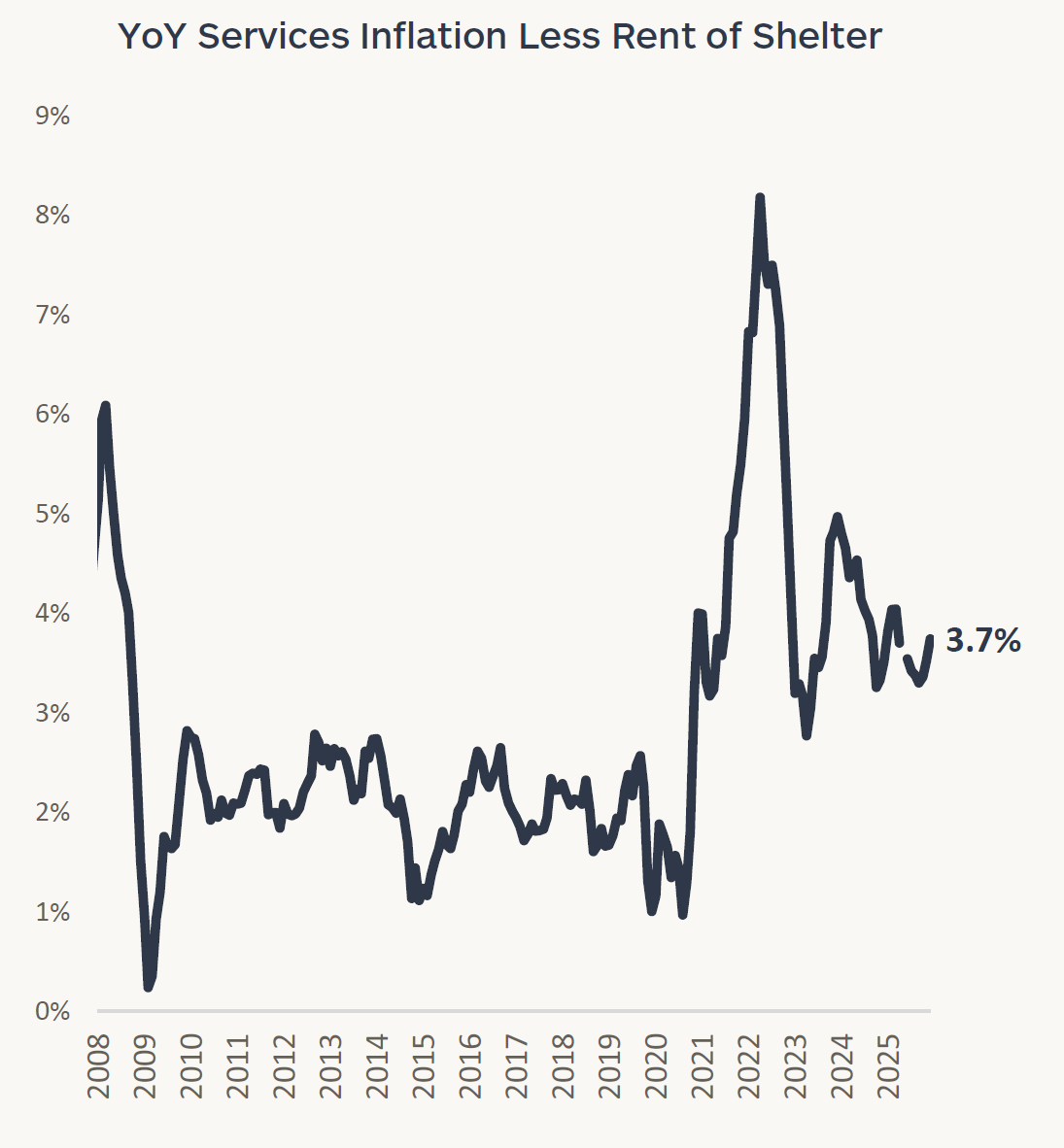
CHART OF THE WEEK: Cerity Partners, FactSet, Bureau of Labor Statistics, through May 2026
Past performance does not guarantee future results.
Please read important disclosures here.