
Joining an investment committee (IC), the group who sets the investment policy, objectives, and risk parameters, is a privilege that comes with real responsibility. Whatever field you come from, the expertise and perspective you bring can add genuine value. You are now a fiduciary, and that role carries weight. As an IC member, you help protect and grow the long-term assets of an institution whose mission will outlast your time on the committee. In the simplest terms, your job is to balance the needs of today with the interests of generations to come.
This insight is intended to help new IC members, particularly those without deep experience in institutional portfolio management, gain an understanding of these portfolios, how they are managed, and how investment committees operate.
It’s worth saying one thing right at the start: Endowment investing is fundamentally different from personal investing. An endowment is meant to last in perpetuity. It must generate sufficient returns to support current spending, keep pace with inflation, and grow the principal over time. These objectives shape everything about how endowment portfolios are built and managed.
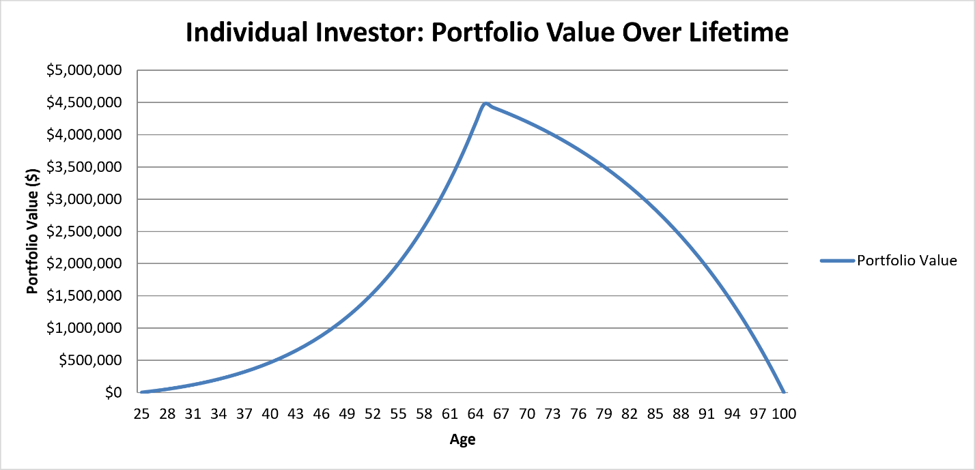
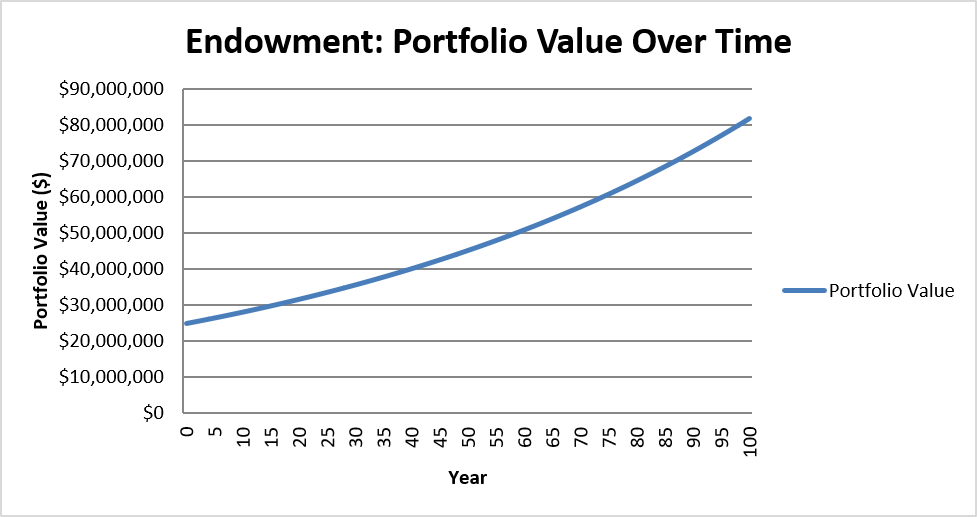
The endowment model of portfolio management
The endowment model of investing was pioneered at Yale University in the 1980s under Chief Investment Officer David Swensen. His core insight centered on institutions’ unique ability to operate with a long time horizon and a limited need for immediate liquidity. As a result, they could afford to invest very differently from individuals or pension funds, and those differences could lead to higher returns.
Rather than a simple mix of stocks and bonds, an endowment portfolio is typically diversified across a broad range of asset classes. Public equities, including domestic and international stocks, form an important core and seek to provide long-term growth. Fixed income often plays a more limited role in many endowment portfolios than it does in personal accounts, because institutions do not rely on the portfolio for income in the same way an individual does. Alternative investments represent a defining feature of the endowment model. These can include private equity, venture capital, real assets, and hedge funds.
Private equity and venture capital funds invest in companies that are not publicly traded, meaning they cannot be easily sold in the short term. In exchange for accepting that illiquidity, investors have historically earned a premium above public equity markets over the long term. Hedge funds pursue strategies designed to generate returns that behave differently from the stock market, providing diversification and downside mitigation that is different than what fixed-income securities can provide. Real assets offer a natural hedge against inflation, since they tend to rise along with the cost of living. Real asset investing also provides a nice opportunity to potentially add return above the simple change in the price of the underlying asset.
Across the portfolio, performance is measured in several ways: absolute return, return relative to a policy benchmark reflecting the portfolio’s asset allocation, and peer comparison against similarly sized endowments. No single measure tells the full story, and a thoughtful IC should consider various performance measures.
The Investment Policy Statement
The Investment Policy Statement, commonly referred to as the IPS, is the foundational governing document for the portfolio. Think of it as the constitution of the investment program. It defines the objectives of the endowment, the level of risk the committee is willing to accept, how assets should be allocated across different categories, and what constraints apply. Every significant investment decision should be traceable back to the IPS. A well-constructed IPS will:
- specify a target return;
- articulate risk tolerance in concrete terms;
- establish target allocations and allowable ranges for each asset class;
- define the spending policy;
- address liquidity requirements; and
- note any special constraints such as environmental, social, or governance considerations.
The IPS is not a static document. It should be reviewed periodically, typically every one to three years, and updated whenever there are significant changes to the institution’s financial situation, spending needs, or risk appetite. New IC members should read the IPS carefully and ask questions about anything that is unclear. An IC member cannot fulfill their fiduciary duty without a deep understanding of the governing document.
Spending policy
The spending policy is one of the most consequential decisions a committee makes. Most endowments distribute between 4% and 5% of the portfolio’s value each year, typically calculated as a percentage of a rolling average to smooth out market volatility. The goal is to distribute enough to meaningfully support the institution’s current programs while retaining enough to grow the endowment in real terms after inflation.
The governance structure: Who does what
The IC is a fiduciary body. Every member is legally and ethically obligated to act in the best interest of the institution. The committee’s role is to set strategy rather than manage day-to-day investments. The IC is responsible for approving the IPS, establishing the asset allocation framework, evaluating performance against stated objectives, and holding the investment team and other service providers accountable. Good committee engagement means coming to meetings prepared, asking substantive questions, and engaging in honest debate about strategy and risk. It also means knowing when it might be advantageous to defer to professionals who manage these assets every day. The line between governance and management is one of the most important boundaries a new member can learn to respect.
Outsourced Chief Investment Officers (OCIOs) are engaged by many endowments and foundations to manage the portfolio on a “discretionary” basis. Discretionary means the OCIO has the authority to make day-to-day investment decisions, within the boundaries established by the IPS and approved by the committee, without needing to call a meeting for each decision. This is different from a traditional investment consultant arrangement, where the institution retains decision-making authority over implementation.
An OCIO executes the strategy, which gives it responsibility for outcomes. The committee hires the OCIO and relies on it to operate within the agreed framework. At committee meetings, the OCIO should present:
- a clear picture of portfolio performance;
- attribution of returns by asset class;
- any changes to the manager lineup or allocation; and
- a forward-looking perspective on risk and opportunity.
Ideally, the OCIO should provide the same information, attentiveness, and level of service that you would get from a dedicated, in-house investment office.
Internal staff, typically the chief financial officer and the finance team, play an important operational role. They coordinate cash flow needs with the OCIO, manage spending distributions from the endowment to the operating budget, support the annual audit, and maintain records documenting investment activity and policy compliance. They serve as the liaison between the institution and the OCIO, and a strong working relationship between the two is essential to a well-functioning investment program.
What a new IC member should focus on
Before attending the first committee meeting, new IC members should read the IPS from start to finish. If anything is unclear, they should ask the OCIO or a senior committee member to walk them through the details. New IC members represent a fresh set of eyes on the IPS, and their input can be valuable. When reviewing performance reports, committee members should resist the temptation to focus exclusively on returns. Risk-adjusted return, or how much return the portfolio generated relative to the level of risk taken, is often a more meaningful measure than raw performance numbers. A portfolio that returned 10% by taking excessive risk may have performed worse on a risk-adjusted basis than one that returned 9% with appropriate diversification.
Awareness of conflicts of interest is a critical part of fiduciary responsibility. If a new IC member has a personal or professional relationship with any investment manager or service provider that could benefit from a committee decision, they should disclose that relationship and recuse themself from the relevant discussion.
Asking good questions is one of the most valuable contributions a committee member can make. It’s not necessary to be the most knowledgeable person in the room to ask why a manager was selected, how the portfolio would perform in a severe market downturn, or whether the spending policy is sustainable given current return assumptions. The OCIO should also be a consistent resource to individual committee members between the formal meetings.
Serving on an IC is a meaningful responsibility. The assets you help steward are not abstract numbers on a spreadsheet. They fund the scholarships that change students’ lives, the professorships that draw remarkable faculty, and the programs that shape an institution’s place in its community. Helping to preserve and grow those assets is a real and lasting form of service.
More than any single skill, long-term thinking is what defines this work. Markets will rise and fall. Managers may shine one year and disappoint the next. What matters most is carrying out the institution’s mission over decades, not quarters. You don’t need to know everything on your first day—no one does. What you can offer from the beginning is curiosity, engagement, and a willingness to ask questions. Every conversation around the committee table has the potential to strengthen the institution’s mission for years to come. That is a privilege well worth taking seriously.
Cerity Partners OCIO is a boutique firm offering customized Outsourced Chief Investment Officer solutions to endowments, foundations, and family offices. We have significant experience partnering with mission-driven organizations for over 15 years. Learn more about how our solutions can help you.
Cerity Partners LLC (“Cerity Partners”) is an SEC-registered investment adviser with office locations throughout the United States. Registration of an Investment Advisor does not imply any level of skill or training. OCIO assets are managed by Cerity Partners OCIO LLC (“Cerity Partners OCIO”), a wholly owned subsidiary of Cerity Partners.
The information presented is limited to general information pertaining to Cerity Partners’ services, views, outlooks, and opinions and is for informational purposes only. Information is presented for illustrative purposes only and does not constitute an exhaustive explanation of relevant considerations when evaluating an OCIO provider. The information contained herein should not be construed as investment, tax, legal or fiduciary advice. There is no guarantee that the views and opinions expressed will come to pass. Before making any decision or taking any action that may affect your finances or your company’s finances, you should consult a qualified professional adviser. The information presented is subject to change without notice and is deemed reliable but is not guaranteed.
Investing involves risk, including the possible loss of principal and fluctuation of value. There is no assurance objectives will be met. Alternative investments can be speculative and may not be suitable for all investors.
Certain information is based on or derived from independent third-party sources that, in certain cases, may not have been updated through the date of this information. While such information is believed to be reliable for the purposes used herein, Cerity Partners has not independently verified the assumptions on which such information is based nor assumes any responsibility for the accuracy or completeness of such information.
©2026 Cerity Partners LLC. All Rights Reserved.
Please read important disclosures here.