

Download this week’s full edition!
The 10-year Treasury yield climbing above 4.5%, rising inflation driven by the Iran conflict’s disruption to the Strait of Hormuz, and growing expectations of a Fed rate hike all reflect how the stagflation shock from this geopolitical crisis is rippling through the global economy.
What caught our eyes this week
Yields are on the move again
The 10-Year US Treasury yield is back above 4.5%, near the top end of its trading range for the past few years. This is not an alarming level yet, but it is something to keep an eye on. At the same time, federal funds futures markets are increasingly betting that new Federal Reserve Chair Kevin Warsh’s first move will be a rate hike, not a rate cut. Last week’s slew of inflation data reinforced the impact the war in Iran is currently having on prices, with the headline Consumer Price Index up 3.8% year over year and headline Producer Price Index up 6.0%. With the Strait of Hormuz still closed nearly three months into the conflict, the cumulative global supply shortage grows more acute by the day. The economic impact is proving to be bifurcated, with energy importers bearing the brunt of the stagflation shock. But as we see from recent moves in US rates and monetary policy expectations, no one is fully immune from global shocks in our interconnected world.
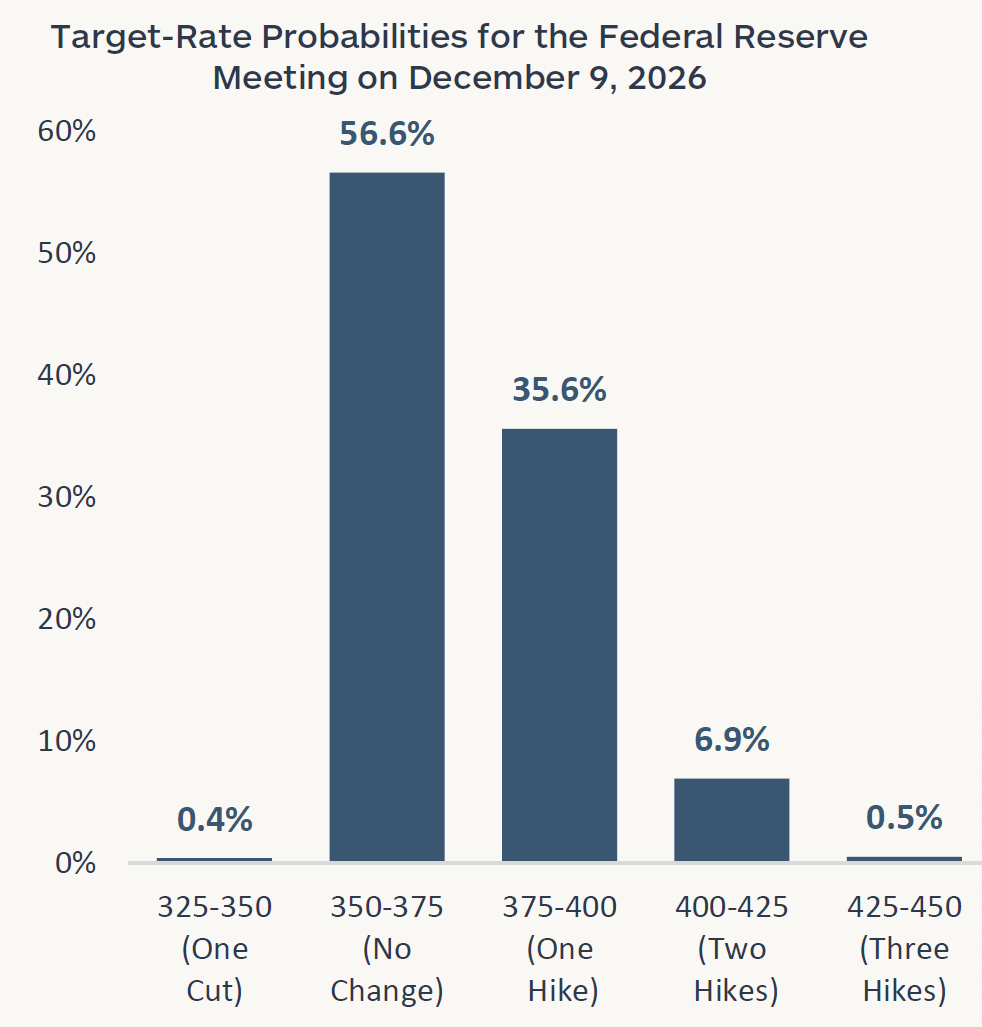
CHART OF THE WEEK: Cerity Partners, CME FedWatch, 5/18/2026
Past performance does not guarantee future results.
Please read important disclosures here.