

Download this week’s full edition!
US Strategic Petroleum Reserve withdrawals have helped stabilize oil markets during Strait of Hormuz disruptions, but with over 100 million barrels already drawn and disagreement over how low the reserve can safely go, prolonged disruption risks exhausting this critical buffer.
What caught our eyes this week
How much is left in the Strategic Petroleum Reserve?
One of the drivers of resilience in oil markets amid historic supply disruptions has been the drawdown of the US Strategic Petroleum Reserve (SPR). On the eve of the Iran war, the SPR held 415 million barrels of crude oil in its network of underground salt caverns. Five months later, over 100 million barrels have been drawn out as part of a coordinated global response. Withdrawal rates have slowed from their peak in May to just under one million barrels per day. If the next phase of Strait of Hormuz disruption calls for a ramp-up of withdrawals, a natural question would be, How much of the remaining 311 million barrels can we realistically pull from the ground? Unfortunately, that question doesn’t have a simple answer; scientists can’t agree on the effective operational minimum levels for the SPR. The US Department of Energy believes it can safely draw down to about 70 million barrels, but other observers put the floor higher, with some arguing that we are already approaching levels where further draws could threaten the structural integrity of the caverns. This uncertainty adds to the importance of finding a near-term path forward for disrupted flows in the Strait of Hormuz. The dynamic resiliency of energy markets has surprised us all so far, but further prolonging of the disruption adds to the risk that buffers like the SPR will reach the end of their ability to provide support.
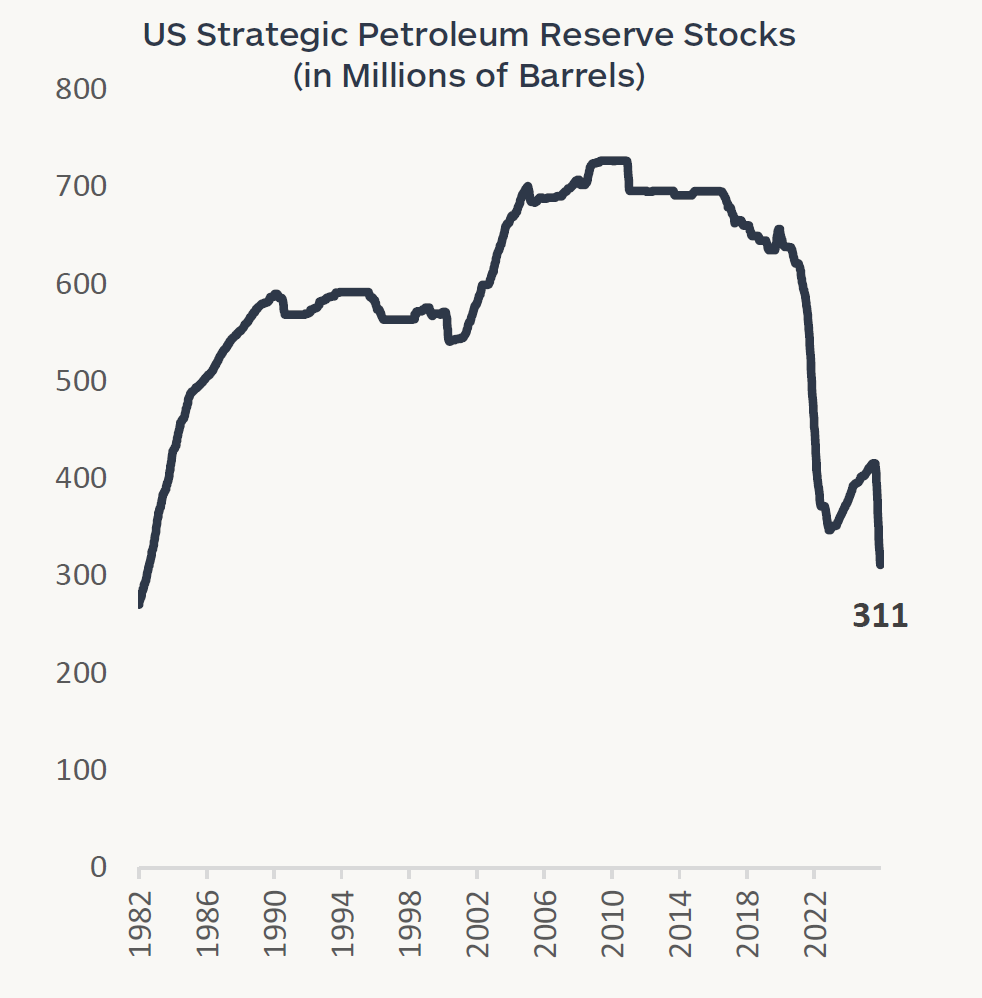
CHART OF THE WEEK: Cerity Partners, Energy Information Administration, as of 7/20/2026
Past performance does not guarantee future results.
Please read important disclosures here.