


Download this week’s full edition!
Longer-dated Treasury yields have climbed to multidecade highs, prompting the Treasury Department to expand its buyback operations; rather than attributing the sell-off to bond vigilantes rejecting federal fiscal policy, we see it as a normalization driven by traditional macro factors like economic resilience, shifting monetary policy expectations, and rising global interest rates.
What caught our eyes this week
Bond markets are in the news again
Longer-dated Treasury yields have been on the rise, with the 30-year yield reaching multidecade highs near 5.3%. The sell-off has the attention of the Treasury Department, which announced last week that it will be increasing the size of its buyback operations meant to facilitate liquidity in secondary markets for off-the-run securities. An extra $2 billion of buybacks per operation is a drop in the bucket relative to the overall outstanding stock of $6 trillion in long-dated Treasury bonds, but it does send a strong signal that could preclude a more meaningful move—for example, limiting issuances at the long end. Taking a step back, we don’t view the recent rise in yields through the lens of the bond vigilantes, who speak of bond markets (finally) rejecting the federal government’s poor fiscal trajectory. Instead, we ascribe the moves to more traditional—albeit less interesting—macro drivers, including economic resilience, a reassessment of near-term expectations for monetary policy, and increasing competition from higher interest rates globally (which have largely matched the increase at home). Taken together, we see more evidence of a normalization to longer-term trends for bond markets in an environment where central banks globally are no longer practicing financial suppression.
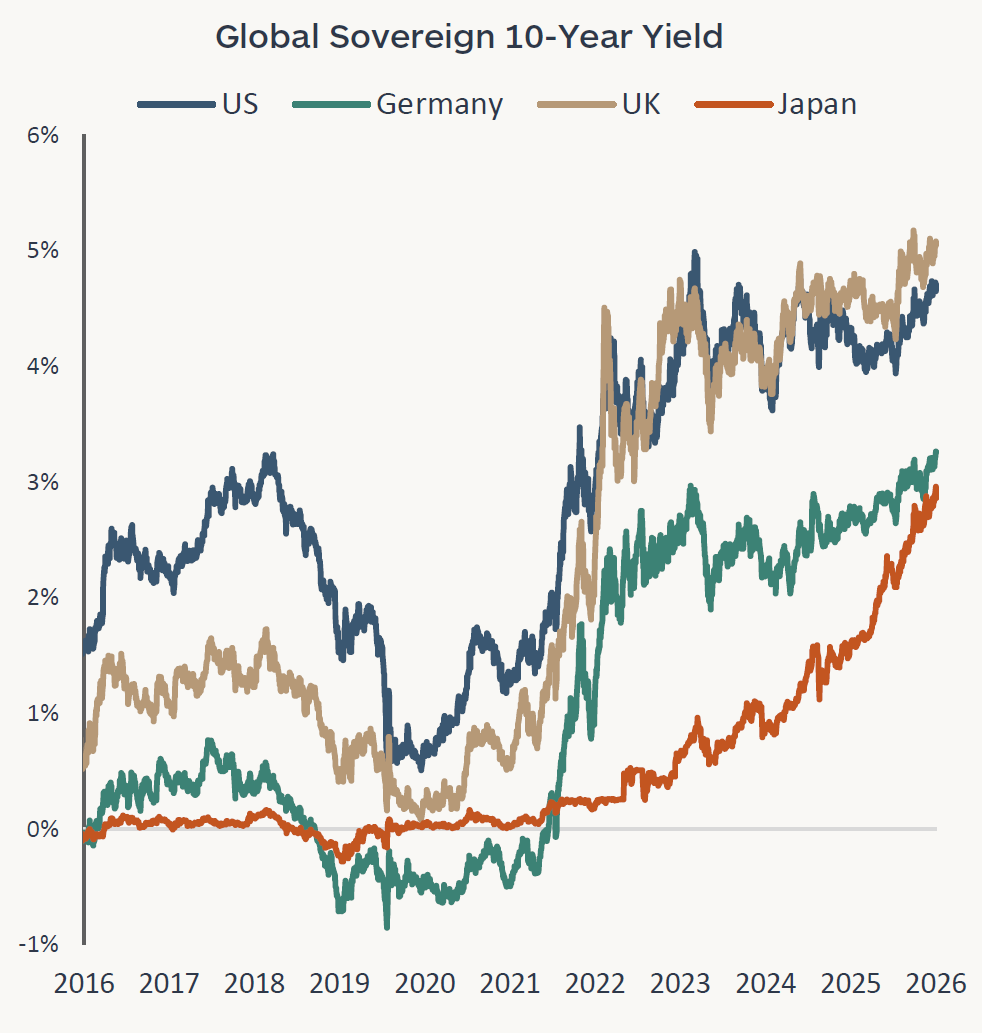
CHART OF THE WEEK: Cerity Partners, Bloomberg as of 8/19/2026
Past performance does not guarantee future results.
Please read important disclosures here.