

Download this week’s full edition!
Despite a rate hike and rising gas costs squeezing households this year, consumer spending remains resilient thanks to historically low household leverage, near-full employment, and increasingly wealthy, low-debt baby boomers whose spending is driven by asset prices rather than borrowing.
What caught our eyes this week
Checking in on the consumer
With the news of last week’s rate hike, we thought it was a good time to revisit the health of the consumer. Through August, the average household has spent roughly $500 more on gas than last year—about $20 more per week since the Iran conflict started. That’s never a fun use of hard-earned money, but it’s hardly a cause for crisis among most (though certainly not all) households. The underlying trend for spending in 2026 has been strong, with retail sales up on average 0.7% per month, or 0.3% after inflation. Household leverage is historically low, whether measured as a percentage of household assets or disposable incomes. If there’s overheating demand from consumers, it’s not coming from borrowing. With the unemployment rate also still at historical lows, nearly all Americans who want a job have one—an obvious swing factor for consumption. Last, an increasing slice of the consumption pie is coming from baby boomers. This generation is retiring enmasse with low debt loads and high wealth. For them, it’s more about asset prices than labor markets. In fact, on net, boomers are savers not borrowers; this means with all else equal, higher rates just put more cash in their pockets.
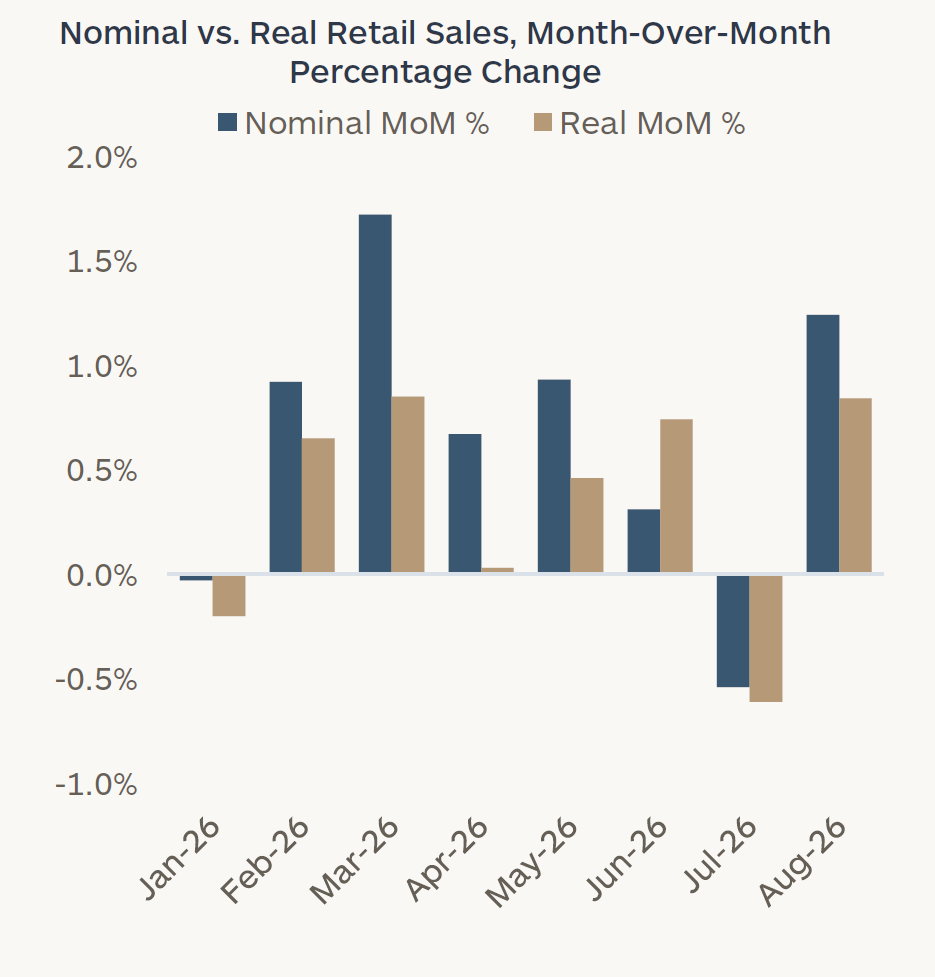
CHART OF THE WEEK: Cerity Partners, FRED
Past performance does not guarantee future results.
Please read important disclosures here.