

Download this week’s full edition!
As capital in the AI trade rotates from hyperscalers to the memory-chip makers benefiting from their spending, surging AI-driven demand has sent memory prices and stocks soaring—raising the question of whether this marks a lasting shift for the historically cyclical memory industry or just another boom destined to bust.
What caught our eyes this week
A memorable rally in memory stocks
Momentum in the AI trade has shifted. Major hyperscalers—seen as the pick-and-shovel play—are now being scrutinized for the jaw-dropping capital outlays needed to compete in the AI infrastructure race. Naturally, investor attention turned from the spenders to the recipients of that spending. Hyperscaler capital expenditures have been a windfall for memory-chip makers like Micron, Samsung, and SK Hynix (which raised $26.5 billion in US markets last week as the second biggest US stock sale in history behind SpaceX). The memory business has historically been a tough one, plagued by cyclicality, commoditization, consolidation, and a steady march lower for prices. But right now, it has what AI needs. As capabilities shift from chatbots to agentic workflows, demand for memory is expanding rapidly and currently far outstripping available supply, sending memory-chip prices higher for not just the hyperscalers, but also the many other industries who rely on them as inputs (see recent price hikes for MacBooks and Xbox consoles). Investors have been following the money, sending the cohort up nearly 100% in the past three months. Is this new source of demand enough to change the game for the memory industry like it did for GPUs? Or is it just another boom in a history of booms and busts?
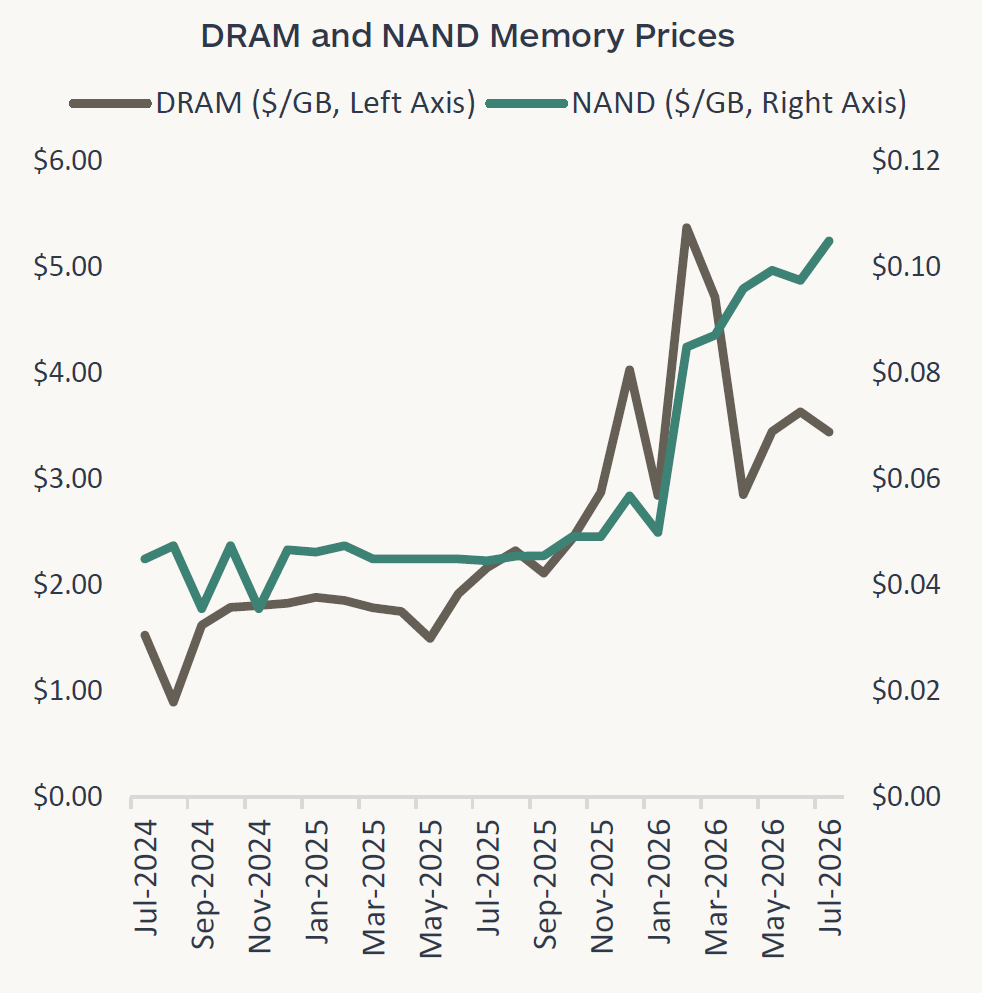
CHART OF THE WEEK: Cerity Partners, FactSet
Past performance does not guarantee future results.
Please read important disclosures here.